

It is well known that primary teeth decay quickly and easily, especially if a child’s oral hygiene is poor.
Tooth decay in children is also contributed to by inadequate nutrition, which among other things includes enormous amounts of unhealthy carbohydrates such as candies, snacks, carbonated and regular juices and the like.
For parents, frequent brushing of primary teeth (especially back teeth) often represents a real challenge. A child is not always willing to brush, and the anatomy of chewing surfaces further complicates and makes the entire process more difficult.
Fissure sealing in dentistry represents a very significant preventive measure. When it comes to maintaining oral hygiene and tooth health, the importance of this procedure consists in the fact that it can help prevent numerous problems – primarily cavities.
In this article, we will reveal what fissure sealing is, why it is important, and what you need to know before you decide to take your child to a dentist.
What is fissure sealing?
The chewing surface of back teeth (primary and permanent) is made up of numerous pits, indentations and grooves.
All of this makes up the fissure system of a tooth. Precisely the fissures represent the sites where cavity formation begins, whose treatment can be very tedious, time-consuming, and in the most severe cases even impossible.
The good news is that this chewing surface can be sealed with one completely simple, fast and painless procedure.
Fissure sealing involves filling the tooth fissures with sealant, which creates one flat surface that is much easier to clean with a toothbrush than fissure pits. In this way, food particles do not remain in the fissure system.
Timely sealing prevents the onset and spread of cavities, because the sealant has the capacity to release fluoride, thereby acting anticariogenically.
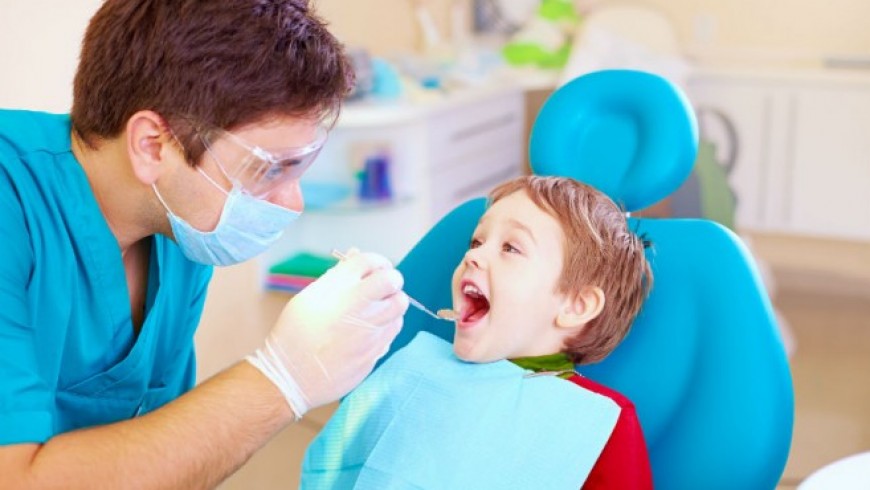
Fissure sealing can be done on both primary and permanent back teeth, but unfortunately, in our practice it is very rarely applied as a preventive measure.
The reason for this is the pervasive belief that primary teeth are replaced anyway, so there is no need to repair them, let alone perform any kind of prevention.
This attitude is completely wrong and can lead to very unpleasant consequences in the future.
Tooth health is important, regardless of which type of tooth it is.
Prerequisites for fissure sealing
When it comes to the prerequisites for fissure sealing, we can say that two conditions stand out as the most important: patient cooperation (which is conditioned by their age) and completely healthy crowns.
Most often, the first permanent teeth are sealed first, specifically the first molars that erupt around the age of six. The younger the patient, the more difficult the sealing procedure can be, because children are sometimes unwilling to cooperate.
However, if there is an opportunity for this, and in most cases there is, the ideal period for fissure sealing is around a child’s third or fourth year of life.
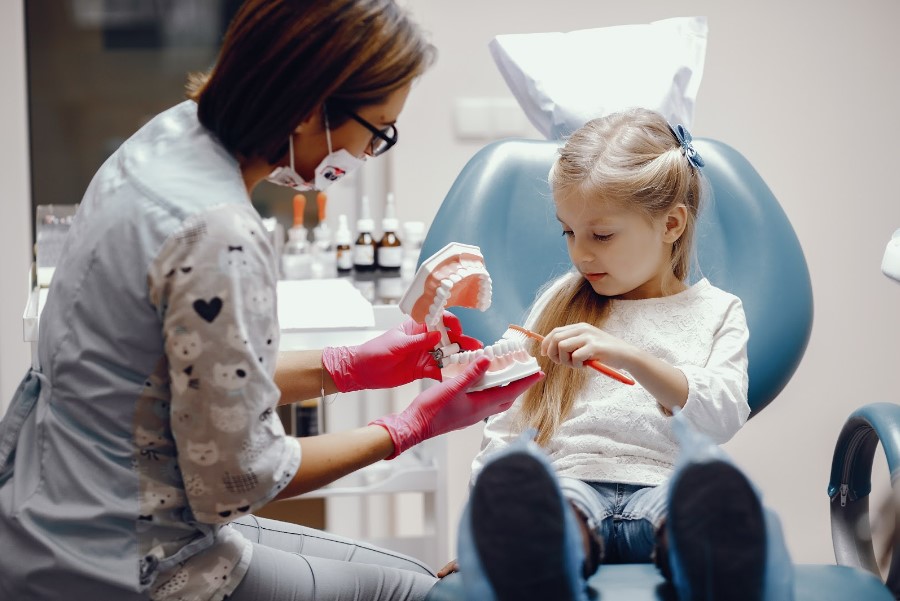
When a child grows old enough, unfortunately, it often happens that it is already too late, and carious lesions on the teeth are already present and fissure sealing cannot help. In that case, treatment will be an unavoidable process. Furthermore, it often happens that the teeth are already approaching physiological replacement, due to which fissure sealing is not financially worthwhile.
However, if none of the mentioned obstacles exist, sealing primary teeth is very much recommended, and as early as possible. In this way, the teeth are protected for a longer period of time because some of them (such as canines) are replaced only around the age of 11-12.
Another important prerequisite is the presence of completely healthy crowns. It is very important to say that fissure sealing cannot be performed if decay already exists and that its primary role is the prevention of decay.
Fissure sealing – procedure
Fissure sealing is a simple, fast and most importantly – completely painless procedure. The entire procedure takes about ten minutes and does not require any drilling or anesthesia, which is most important to children.
Before fissure sealing, it is necessary to thoroughly clean the surfaces of the teeth that will be treated. This is done with the help of a rotating soft toothbrush and special paste. In this way, all possible food debris and deposits that may have been hidden in the fissure system of the tooth that will be sealed are cleaned.
After that, the tooth surface is etched with a special acid (this procedure lasts about 30 seconds). When the acid does its work, the tooth is carefully rinsed and dried.
Etching the surface with acid allows the smooth tooth surface to be transformed into a microscopically visible and rough one, which further allows the sealant to penetrate better and bond to the tooth.
The sealant has a liquid consistency, which allows it to flow easily into all the pits and indentations of the tooth, which was previously etched with acid.
To distinguish it from the natural tooth, the sealant is most often milky white in color. This distinction is important and necessary to facilitate the control of the applied sealant by the dentist and parents.
The material used for fissure sealing transitions from liquid to solid state with the help of a polymerization lamp. If any excess sealant remains that interferes with the bite, the dentist will very quickly and easily remove that excess.
What is perhaps most important of all – it is completely safe to consume food and drink immediately after the procedure. Although recommendations suggest waiting some time, there are no concrete obstacles to eating and drinking.
Fissure sealing – duration
There is no exact duration for fissure sealing. It is individual and generally lasts between 3 and 5 years, and often much longer. As long as the sealant is completely present – without any cracks, damage, and has not worn away – it 100% protects the fissure system and prevents cavity formation in the sealed areas.
Whenever possible, dentists recommend fissure sealing guided by the principle that it is better to prevent than to treat.
Maintenance of fissures
In order for sealed fissures to last as long as possible, it is necessary to maintain them regularly and properly. This among other things includes regular dental checkups – preferably at 3 and 6 months.
Checkups are very important to notice any possible changes in the form of lost or incomplete sealants. In that case, the dentist will most likely recommend that old fissures be replaced with new ones.
Furthermore, regular tooth brushing and in general, regular maintenance of oral hygiene is something that is taken for granted. If the teeth are not brushed, cavities can develop even if fissures are sealed.
If you want to quickly and painlessly prevent the appearance and development of one of the biggest dental problems of today – cavities – think carefully about whether fissure sealing might be the only right way to do it for yourself and your child.