
Damon fixed braces are a modern orthodontic appliance that moves teeth and positions them correctly in the jaw, using gentle biological forces instead of the strong pressure of classic brackets. They are used when teeth are crowded, spaced, rotated, or when there is a malocclusion that makes chewing and hygiene difficult.
Treatment with Damon braces is not just an aesthetic decision – it directly affects the health of the teeth, gums and bone tissue that holds the teeth in place. At the Dental Vortex clinic, orthodontic treatment is led by a specialist in jaw orthopedics, certified for the Damon bracket system.
A correct position of the teeth is not just a matter of appearance – it protects the teeth from premature wear and decay.
What Damon braces are and how they work
Damon braces belong to the so-called self-ligating systems. This means the brackets have a built-in mechanism (a small door) that holds the wire, so there is no need for the elastic or metal ligatures used with classic fixed braces.
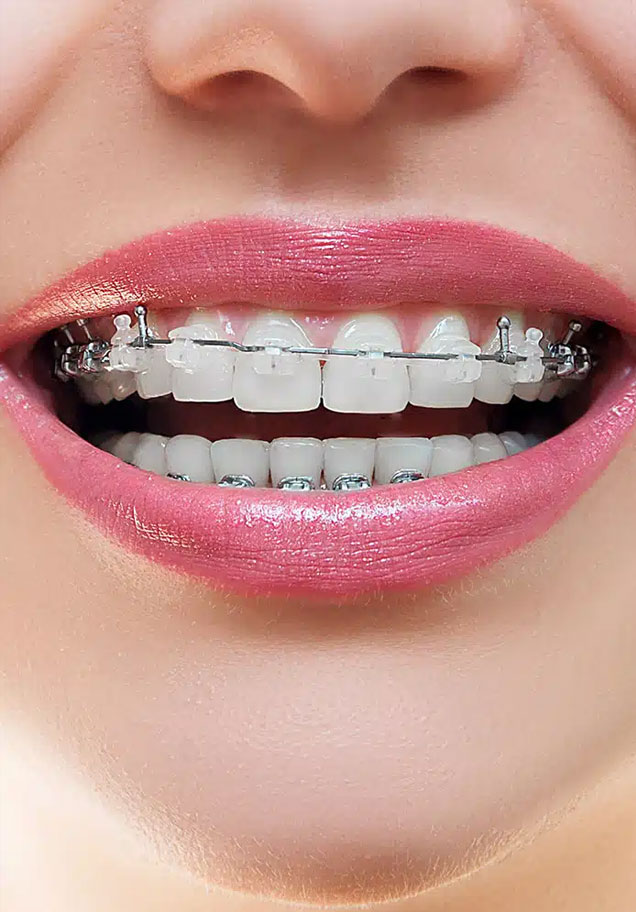
The most important difference, however, is not in the appearance of the brackets, but in the working principle: the Damon system uses biological forces – gentle, continuous forces similar to those generated by the facial muscles. Such forces move teeth more naturally and painlessly, while in classic ligated systems the pressure is often stronger, and part of that force is lost to friction between the wire and the ligature.
The practical consequences for the patient are clear:
Shorter duration
Treatment is on average up to 6 months shorter compared to classic systems.
Less frequent check-ups
Check-ups are most often every two months, instead of every month.
Greater comfort
Significantly less discomfort throughout the entire treatment thanks to the gentle forces.
Preserving teeth
In most cases there is no need to extract healthy teeth or use palatal expansion appliances.
What the Damon appliance consists of
Damon fixed braces have three basic components:
- Self-ligating brackets – bonded to the surface of the teeth with a special adhesive, without drilling or damaging the teeth. Available in metal and aesthetic (Clear) variants.
- Archwire (wire) – passes through the brackets and creates the force that moves the teeth.
- Built-in closing mechanism – holds the wire in the bracket and replaces the classic elastics.
The intensity of the force depends on the thickness, shape and material of the wire. The orthodontist selects the combination that suits the treatment phase and the type of irregularity.
Types of Damon braces
Two variants of the Damon system are available at the Dental Vortex clinic.
Damon braces – metal brackets
The classic variant of the Damon system with stainless steel brackets. It provides all the advantages of a self-ligating system (gentle biological forces, less frequent check-ups and shorter treatment duration) at a more affordable price. Suitable for all ages.

Damon Clear – aesthetic Damon braces
Damon Clear uses transparent, almost invisible tooth-colored brackets made of a special composite material. The functionality is identical to the metal variant, but the aesthetic effect during treatment is incomparably better. An ideal solution for adult patients to whom appearance throughout the entire treatment is important.
Face-driven orthodontics – more than straight teeth
The Damon system is based on the concept of face-driven orthodontics. This is an approach in which treatment is guided by the appearance of the whole face, and not only by the position of the teeth.
The reason is simple: the position of the teeth and the shape of the dental arch directly affect facial features, lip support and the width of the smile. Classic braces that require tooth extraction can lead to a flattened profile and a narrowed smile. The Damon system, on the contrary, creates a wider and more natural dental arch, which has a positive effect on the entire appearance of the face.
To achieve the full effect of this technique, it is not enough to simply have Damon brackets – appropriate training of the orthodontist is also required. The specialist at the Dental Vortex clinic holds relevant certification for the Damon system acquired both at home and abroad.
How Damon braces are placed
Before the placement itself, several preparations are required. The whole process looks like this:
Orthodontic exam and analysis
The specialist takes impressions of the jaws and prescribes X-rays, on the basis of which a detailed treatment plan is created.
Treatment of the oral cavity
Before the appliance is placed, it is necessary to treat all caries and remove dental calculus. In some cases a minor intervention may also be needed (frenectomy or treatment of gum recession).
Placing the brackets
The brackets are bonded to the teeth with a special adhesive, without drilling the teeth. The procedure is not painful and usually takes one to two hours.
Placing the archwire
The wire is threaded through the brackets and fixed using the built-in mechanism. From that moment, the action of the biological forces begins.
Instructions and check-ups
The patient receives detailed instructions on diet, hygiene and how to chew. Check-ups are on average once every two months.
After the braces are removed, the clinic takes impressions for retainers – transparent foils that are worn at night and prevent the teeth from returning to their previous position.
Does Damon braces hurt
No. The placement of Damon braces itself is not painful. During bonding of the brackets and placement of the wire there are no unpleasant sensations. What may occur in the first days after placement, as well as after check-ups, is a mild feeling of pressure and tightening on the teeth – a sign that the appliance is working.
Thanks to the gentle biological forces the Damon system uses, this discomfort is significantly less than with classic braces and usually passes within two to three days, most often without the need for pain medication.
Wires and brackets can initially irritate the inside of the lips and cheeks. For that there is orthodontic wax that is applied to the problematic spot and instantly relieves the irritation. Damon braces do not hurt, but they require a short adjustment period of a few days.
Who Damon braces are for
The Damon system is recommended in the following situations:
- Crowded or overlapping teeth – there is not enough space in the jaw, so the teeth push against each other.
- Gaps between teeth (diastemas) – too much space between individual teeth.
- Malocclusion – deep, reverse or open bite.
- Rotated or tilted teeth.
- Problems with chewing or speech resulting from an incorrect position of the teeth or jaws.
Damon braces are most often placed when most of the permanent teeth have already erupted, which is usually between the ages of 12 and 13. However, orthodontic treatment is not limited by age – the Damon system, especially in the Clear variant, is very popular among adult patients because it is discreet and takes less time than classic systems.
Contraindications can be poor condition of the gums and bone (periodontal disease), pronounced gingival recession, active caries that has not been treated, or insufficient motivation of the patient to maintain hygiene regularly. All of this is assessed at the first orthodontic exam.
Oral hygiene while wearing Damon braces
Although the Damon system makes hygiene easier due to the absence of ligatures on which food residue otherwise accumulates, regular cleaning is still essential.
The recommendations are as follows:
- Brushing the teeth after every meal – a classic toothbrush is combined with a sulcus brush (cleans the area along the gums and around the brackets) and an interdental brush (cleans the space between the teeth and under the wire).
- Dental floss – there are special threads and floss threaders that make it easier to thread the floss under the appliance wire.
- Mouthwash – additionally reduces the accumulation of bacteria.
Hard food (hard bread, apples that are bitten into, walnuts, hard candy) can dislodge a bracket or bend the wire. Sticky food (caramels, chewing gum) lingers around the appliance and makes cleaning difficult. Both types of food should be avoided throughout the entire treatment.
Wax for fixed braces – when and how it is used
Orthodontic wax is a small but useful item that every patient should keep at hand, especially at the start of treatment. It is a soft, neutral wax that is applied directly to the bracket or part of the wire that irritates the inside of the lip or cheek.
It is used in a few steps:
- Dry the teeth and appliance – the wax adheres better to a dry surface.
- Take a small piece of wax – a pea-sized piece is enough.
- Warm it between your fingers – a few seconds is enough to soften it.
- Press it onto the problematic spot – shape it so that it covers the bracket or part of the wire that is causing irritation.
The wax creates a smooth barrier between the metal and the mucous membrane and instantly reduces irritation. It is most often needed in the first days after the appliance is placed; as the lips and cheeks get used to the appliance, the need for wax decreases.
Damon braces experiences
At the beginning, in the first week, changes are felt, you have to get used to everything you want to eat, there is pain in the jaw during the first couple of days, but after a week all of that passes and you get used to proper cleaning and proper brushing. Soon everything returns to normal. Listen to the whole experience.
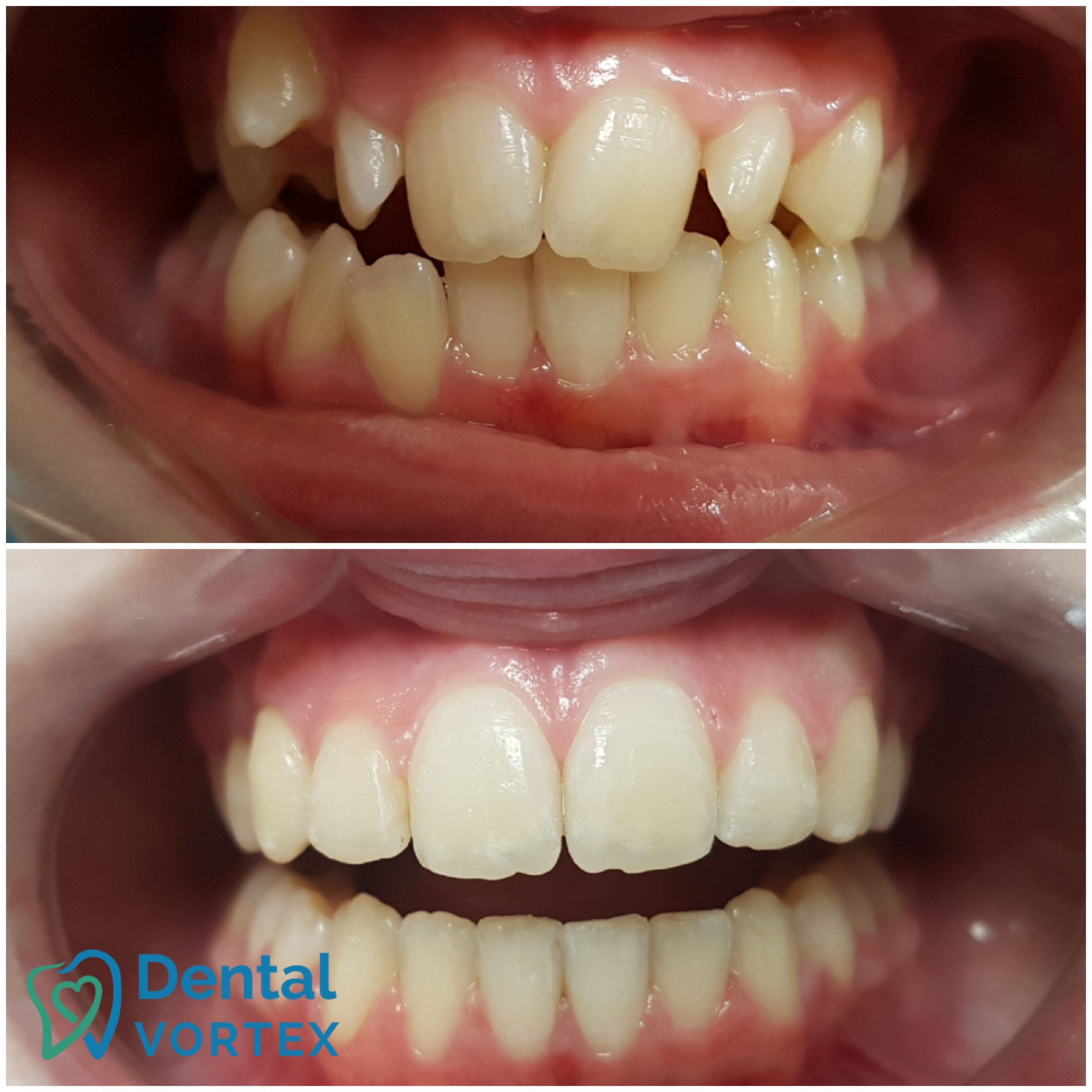
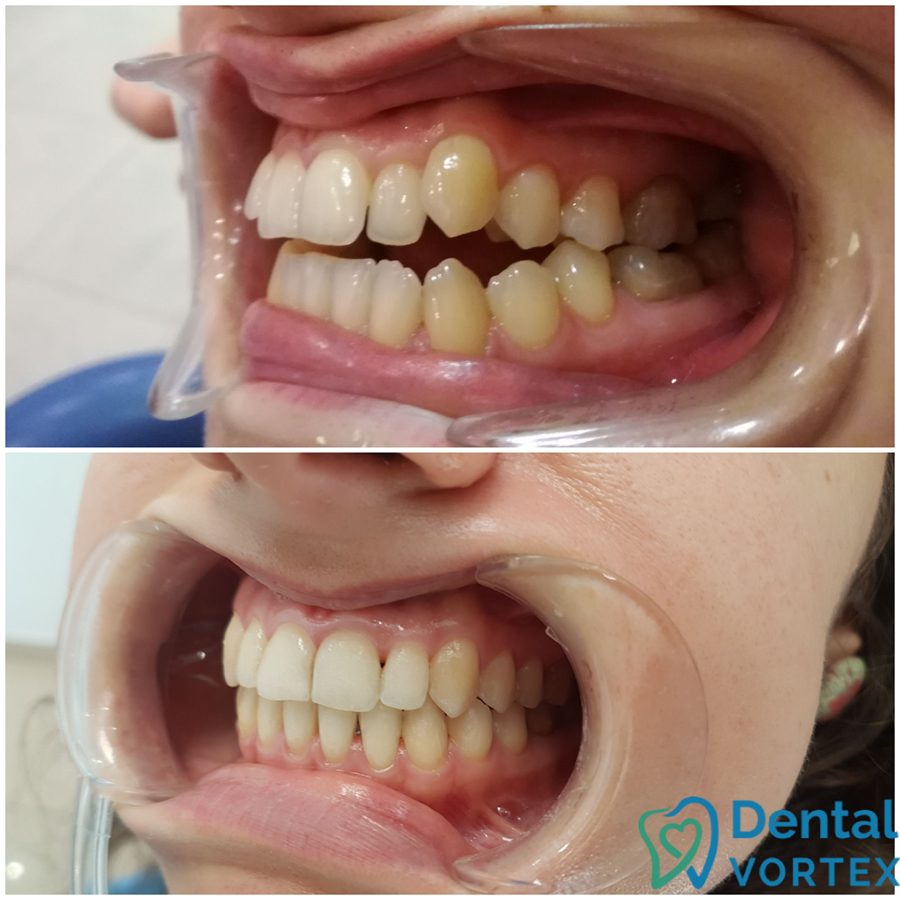
Damon braces before and after
Take a look at the results of our patients before and after treatment with Damon braces – the photos clearly show how much difference a correct tooth position makes for the overall appearance of the smile.
Damon braces price
At the Dental Vortex clinic, all prices are transparent and are stated in advance, before treatment begins.
| Service | Price |
|---|---|
| Specialist orthodontic examination | 5500 RSD |
| Analysis for fixed appliance | 8000 RSD |
| Damon fixed appliance - metal bracketsPrice per jaw | 135000 RSD |
| Damon fixed appliance - aesthetic bracketsPrice per jaw | 164000 RSD |
The listed prices refer to one jaw. At the first specialist exam, the orthodontist assesses which variant suits your case and informs you in advance about all the costs of treatment.
Frequently asked questions
Schedule an orthodontic exam
If you are considering Damon braces, the first step is an orthodontic exam. At it, the specialist assesses the condition of your teeth and jaws, explains whether the Damon system is the right solution for you, and informs you in advance about the course and cost of treatment. There is no obligation or rush – just a clear picture of what is possible and what you can expect.
At the Dental Vortex clinic in Zvezdara, orthodontic treatment is led by a specialist in jaw orthopedics certified for the Damon bracket system. The clinic receives patients every working day, as well as on Saturdays.
A correct smile is not only aesthetics – it is an investment in dental health that lasts for years. Schedule an exam by calling the number, by email or online.