

Tooth extraction is the process of removing a tooth from its socket. If there is a possibility, the dentist will always first attempt to “save” the tooth through treatment, placing a filling or crown, or in some other way.
This “saving” is possible if the tooth is damaged by decay or broken, that is, if it involves damage that can be repaired.
There are many reasons for tooth extraction – advanced decay, periodontal disease, abscess (advanced infection), tooth root fracture, and so on. The dentist or oral surgeon, using an X-ray image of the damaged area, creates a plan for the most effective tooth removal.
The most commonly extracted teeth are wisdom teeth. These are teeth that erupt late (in the twenties) and are usually impacted (stuck) in the jaw, so they are often extracted before or after they partially erupt, usually by surgical means to prevent complications they cause (pain, swelling, difficulty swallowing, and so on).
Approaches to tooth extraction – what to expect?
There are several different ways to extract a tooth, depending on the type of problem and its severity:
- Routine (simple) tooth extraction – is generally performed under local anesthesia, and as its name suggests: represents a routine procedure. The dentist grasps the tooth with forceps, loosens it back and forth, after which the tooth is extracted.
- Complicated tooth extraction – is most often performed on multi-rooted teeth with a broken crown. In this case, it is necessary to separate the roots so they can be extracted one by one.
- Surgical tooth extraction – is definitely the most complicated and most difficult form of tooth extraction. It is performed when the tooth root breaks during extraction, leaving a smaller part in the socket. In this case, a small incision is made, the mucous membrane is lifted, and rotary instruments are used to form a space around the broken part of the tooth, after which it is removed. After this procedure, the resulting wound is sutured.

However frightening all these procedures may sound at first glance, none of them usually hurts. Much more painful are the consequences of postponement and waiting for the problem to resolve on its own because, unfortunately, this can lead to numerous complications.
After any tooth extraction, the recommendation is to apply PRF preparation. We especially recommend it after more difficult surgical extractions so that the postoperative course is as smooth as possible, without swelling, and so that pain after tooth extraction is reduced to an absolute minimum.
Removal of tooth root remnants
It is of utmost importance to remove tooth root remnants because they can cause numerous problems – bad breath, weak immune system, and generally have a negative effect on the entire human body. If the tooth root cannot be strengthened and used for prosthetic replacement (due to length or possible infection), it must be extracted as soon as possible.
In the case where a pus sac is present after root extraction, it is important to remove it as soon as possible.
If the tooth root cannot be removed by ordinary, non-surgical methods, then an oral surgical procedure is performed. Since it is performed under local anesthesia, the process of extracting the root is painless.
During the recovery phase, it is necessary to follow the dentist’s or oral surgeon’s advice and instructions.
The professional team of doctors at DentalVortex dental clinic will give you all the necessary advice and guidelines, and provide complete care during and after the tooth extraction procedure, which means you won’t have to worry about complications.
You are in safe hands with us.
Possible complications during tooth extraction
Unfortunately, as with everything, so when it comes to tooth extraction, unwanted complications can occur:
- Excessive bleeding – is the most common consequence of tooth extraction. In most cases, bleeding occurs in situations when the patient does not follow the dentist’s advice and recommendations. If the wound bleeds, the recommendation is to bite sterile gauze or a tea bag and hold cold compresses on the outside. If the bleeding is heavier, see an oral surgeon.
- Infection – although the risk of infection during tooth extraction, with the development and advancement in medicine, is minimized, it is still not completely ruled out. This is especially pronounced when it comes to wisdom tooth extraction. Additionally, naturally, people who have weaker immune systems are more prone to infections. If infection does develop, it is treated with antibiotics and drainage.
- Wound healing disorder – the most common complication of this type is so-called alveolitis. It occurs when the blood clot at the site of tooth extraction breaks down. Such a disorder can develop when gangrenous teeth are extracted or when lower wisdom teeth are extracted. One type of therapy is the application of a certain medication to the wound which is changed as needed. Another type of alveolitis therapy is the application of PRF preparation. Sometimes an X-ray is necessary after extraction to rule out other causes of delayed wound healing.
Why is it important to replace an extracted tooth?
More and more people want to have a perfect smile. As in many other branches of medicine, significant progress has also occurred in dentistry. Until recently, the only way to bring teeth to the desired condition were fixed dentures, which were attached to teeth and worn for years.
With extraction, that is, loss of a tooth, the chewing force is distributed to the other teeth which try to minimize the resulting empty space in the jaw. The axis of these teeth, in relation to the force, is no longer normal, so the tooth load ceases to be vertical and is directed at a certain angle.
Because of this, there is an increase in the effect of lateral forces, so teeth much more easily become crooked and become more prone to numerous injuries.
Another problem is the occurrence of tooth “floating” in the opposite jaw (so-called opposing tooth), because it no longer hits the extracted tooth. Thus the tooth begins to stick out compared to all the others, and because of this the occlusal plane is disrupted.
Implant placement – the most effective solution for replacing a missing tooth
Teeth are of utmost importance to humans. Unfortunately, many become aware of this only when they lose one or more. Tooth extraction or its loss of any kind, is usually accompanied by numerous complications. First of all, there is the problem with chewing, and later also with digestion, which ultimately leads to deterioration of the general condition of the body.
In addition, there is also loss of confidence because often there are problems with speech, and not to mention the aesthetic appearance of people who lose one or more teeth in the jaw.
The perfect solution for a missing tooth is implant placement.
Dental implants are placed as a solution for the loss of at least one tooth, but also if a person loses all teeth in the jaw.
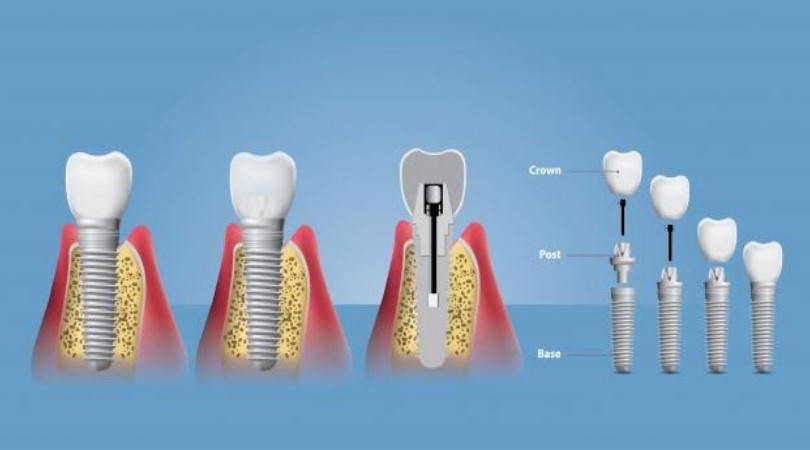
A dental implant is a titanium screw that is placed in the jawbone and becomes an artificial root. An artificial crown is placed on it with the help of an abutment (connection between the implant and the crown), which is an excellent solution if a single tooth is missing.
Dental implants can also serve as supports for fixed dental work (dental bridge) or dental dentures if multiple teeth need to be replaced.
The process of osseointegration is the primary reason why implant placement is considered the most effective solution for tooth loss. Osseointegration is the process in which the implant completely fuses with the surrounding jawbone and thus becomes part of it, and it is precisely this that contributes to implant placement resulting in the creation of a natural appearance and tooth condition.
The process of dental implant placement today is almost completely a routine procedure with a success rate of 96%. Although this is a process that can take 3-4 months, it will in no way affect your regular activities because crowns and temporary dentures are used during the transition period.
Without any doubt, implant placement is the best solution from a dental perspective.
In our clinic, we use the best types of implants from world-renowned brands.
If you have any questions about any dental service from implant placement to tooth extraction, call us.