

Have you noticed white spots on your teeth and does it bother you because it affects your smile? The good news is that over the last few years, this problem can be resolved without drilling your teeth. White spots or “white spot lesions” can appear immediately when teeth erupt, but can also develop later in life.
White spots on teeth – why do they form?
White spots on permanent teeth are sometimes a result of injury or infection of a baby tooth that has damaged the permanent tooth bud, and can also occur as a result of taking certain medications, systemic infections, or lack of certain vitamins during tooth formation. Sometimes they can also occur as a result of dental fluorosis, i.e., excessive fluoride intake, or molar incisal hypomineralization, which is increasingly common. When white spots appear in adults, they most often represent the beginning of a carious lesion, but can also occur after wearing orthodontic appliances due to insufficient oral hygiene maintenance.
An interesting fact that explains the appearance of white spots is that plaque will begin to form on a cleaned tooth in just 20 minutes. Plaque is a collection of bacteria that accumulates on the surface of teeth and dentures and adheres strongly to their surface, and can only be removed by mechanical cleaning and brushing. If, as a result of biochemical processes between the enamel surface and plaque, the pH value drops below the critical value (pH 5.2-5.7), minerals will dissolve from the enamel, and through this process cavities will begin to form.
Bacteria in our mouths that feed on sugar and starch produce acids during their metabolism. These acids dissolve minerals from tooth enamel, which leads to the creation of tiny holes and pores on the tooth surface. White spots are actually areas of demineralized enamel, which as such is less resistant and prone to cavity formation. In these areas, the enamel loses its translucency, so it takes on a chalky white color, to which some yellow and brown pigments can be added. This process can also lead to weakening of the tooth structure, and later to more severe cavities, which in the initial stage can be perceived as a white spot on the tooth surface.
Areas between teeth are particularly susceptible to cavity development because they are harder to clean. Because of this, not only do cavities develop more easily here, but they are also harder to detect and treat.
Since the treatment of these spots used to be done only in the traditional way, that is, invasively, by drilling and filling teeth, it often resulted in greater loss of healthy teeth. However, now there is a new way to treat early cavities.
White spots on teeth and their treatment with ICON method
This revolutionary combination of preventive and minimally invasive treatment methods enables innovative treatment of advanced lesions down to the dentin-enamel junction. ICON preparation is a viscous composite resin that infiltrates the lesion and thereby strengthens it and restores its translucency, homogeneity, and shine. And the best part is that the results are permanent. In a single visit, your teeth can look new again. The procedure is short, takes about 30 minutes, and is completely painless and non-invasive.
ICON treatment process
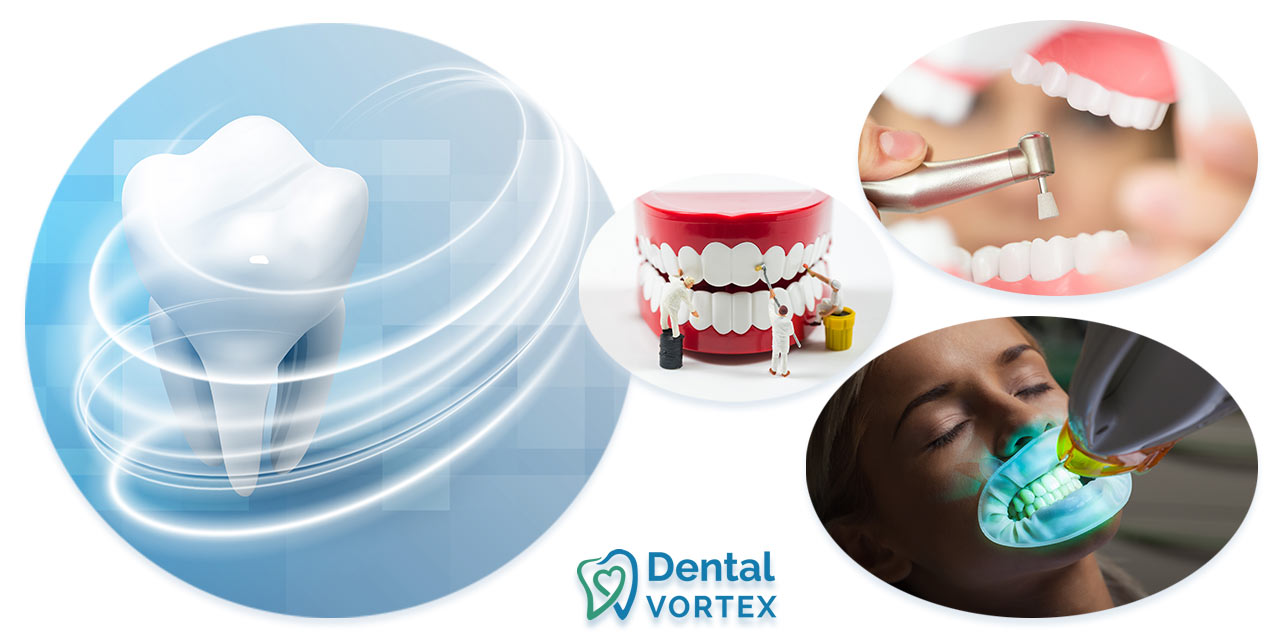
The ICON treatment process involves first thoroughly cleaning the teeth and removing all pigments and food debris. Gels from the ICON kit are applied to clean teeth until the white spots disappear. With careful gum protection during treatment, focusing on affected areas, white spots become structurally receptive to the ICON surface filler. If necessary, the application can be repeated multiple times without any risk to the teeth. At the end, when the spots completely disappear, the teeth need to be polished, and results are immediately visible. If the spots are quite pronounced and cover a larger surface area, sometimes to achieve the full effect, along with the ICON procedure, teeth whitening should be included to reduce the contrast between the teeth and the white spots. In that case, teeth whitening is done first, after which the procedure with ICON preparation is performed.
Advantages of ICON preparation
- procedure is gentle on teeth – minimally invasive technique with no tooth loss
- treatment tailored to the patient – no drilling, no pain, so anesthesia is not needed
- prevents cavity progression
- remineralizes (replenishes minerals in) the tooth
- long-lasting results
With early and quick cavity detection, this procedure offers an excellent opportunity to treat patients who are extremely anxious about the sound of the drill. This therapy can also be applied to children, but the ability to cooperate is important.
This method can be used on smooth surfaces, that is, not on the surface of molars.
Therapy for white spots – video
Schedule your appointment for painless white spot removal treatment and smile at the world!